

Editors
Introduction to Agility CMS
Agility CMS is a **headless content management system** that separates content management from presentation.
Agility CMS is a headless content management system that separates content management from presentation. This means:
- Content is reusable: Create content once, use it anywhere
- Flexible presentation: The same content can appear on websites, mobile apps, or other platforms
- Modular approach: Pages are built using reusable components
Understanding Headless Architecture
Agility CMS follows a headless architecture pattern, where content management is completely separate from content delivery:
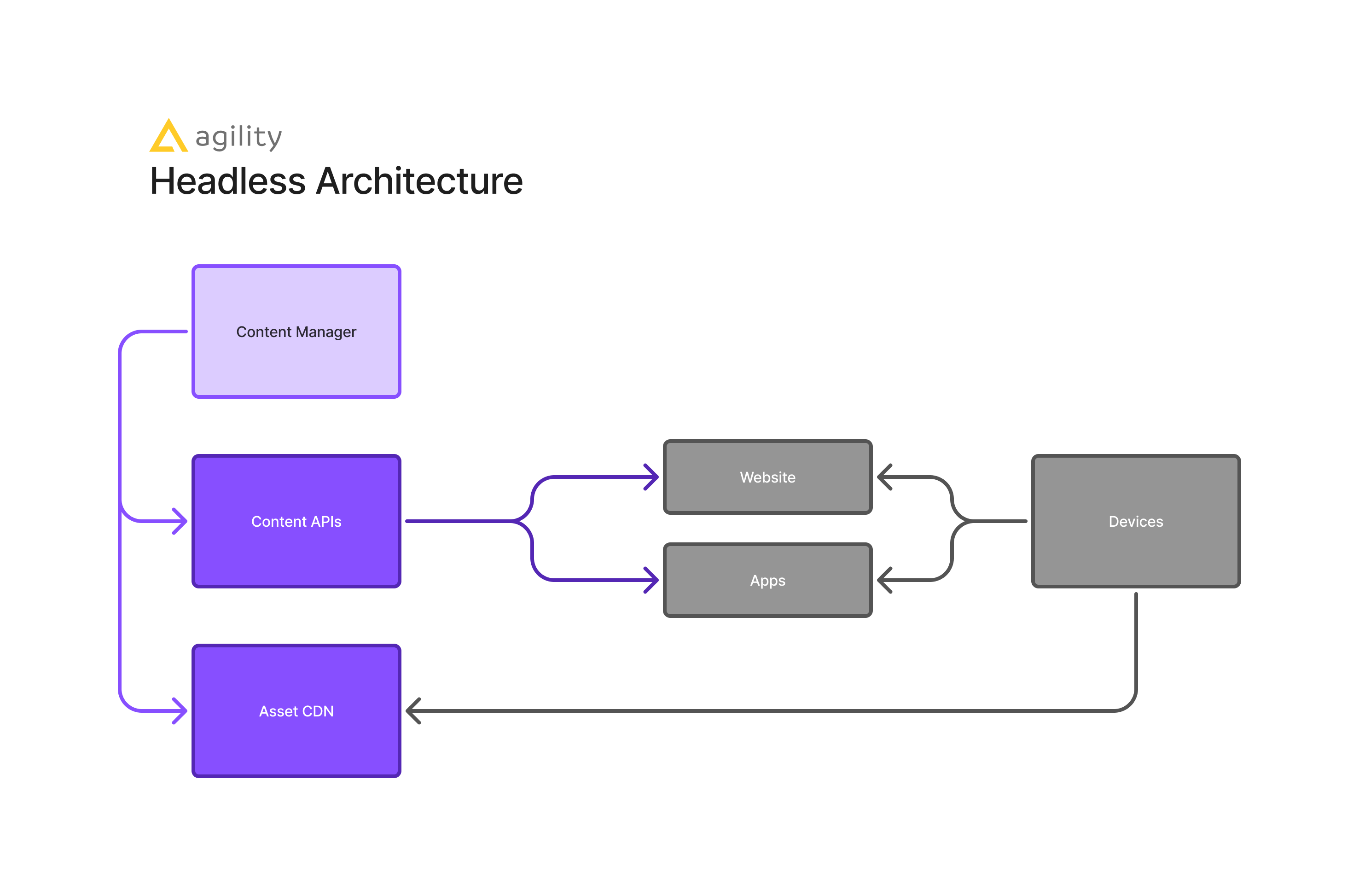
In a headless architecture, content is created in the Content Manager, exposed through Content APIs, and consumed by various frontend applications (websites, mobile apps) which then deliver the experience to end-user devices. Assets are delivered directly via a CDN for optimal performance.
Key Benefits:
- Multi-channel publishing: Same content for web, mobile, and other platforms
- Technology freedom: Use any frontend framework or technology
- Performance: CDN delivery and optimized asset management
- Scalability: Scale content management and frontend independently
Understanding the Data Model
Agility CMS organizes content using a structured data model that separates content from presentation:
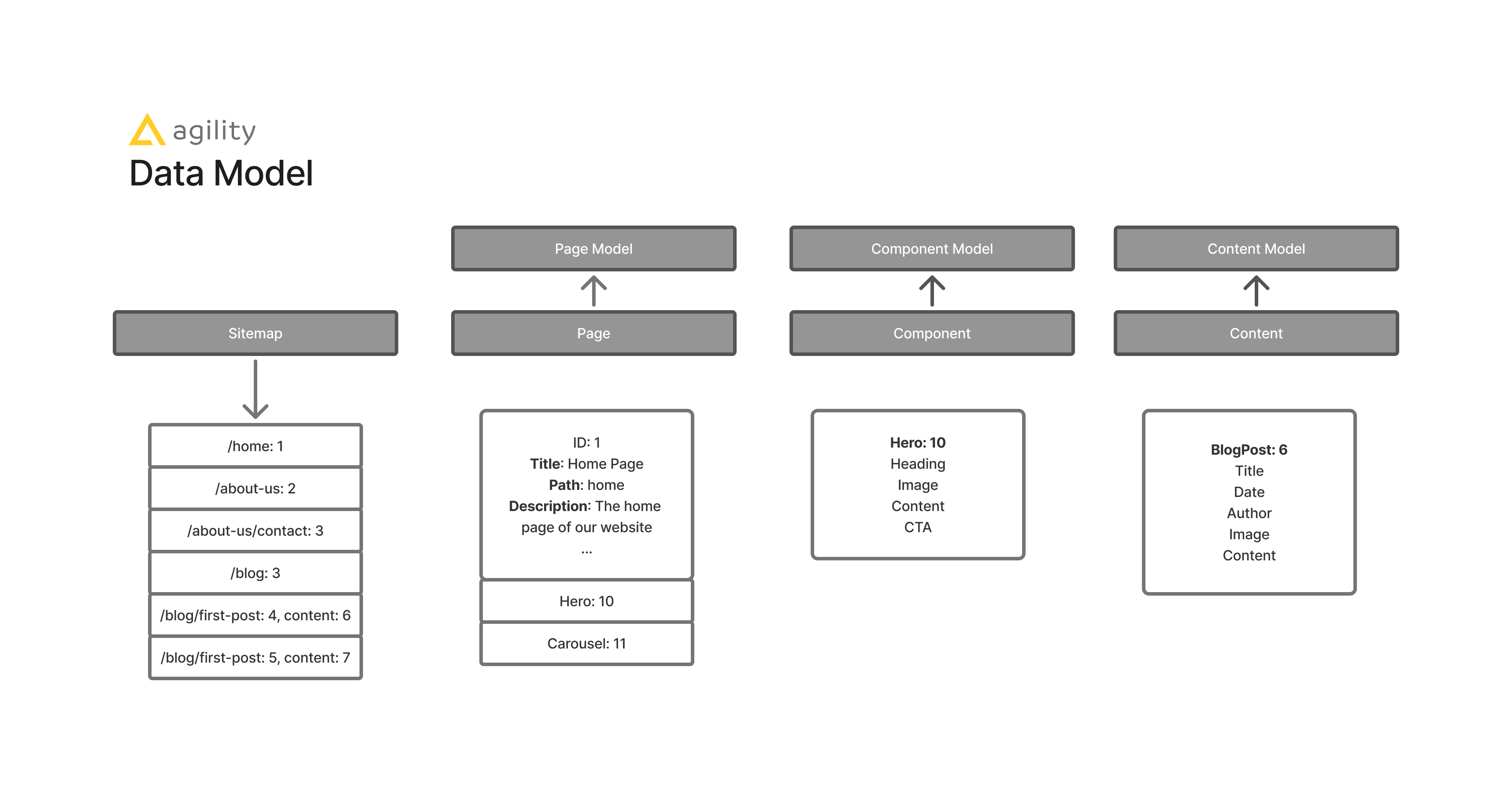
The Agility data model shows how a Sitemap organizes Pages, Pages contain Components, and Components display Content Items. Each entity (Page, Component, Content) has a corresponding Model that defines its structure. This separation allows content to be reused across multiple pages and components.
Key Relationships:
- Sitemap → Maps URLs to Pages
- Pages → Contain multiple Components
- Components → Display Content Items
- Content Items → Standalone, reusable pieces of content
Understanding the Interface
The Agility CMS interface is organized into four main sections:
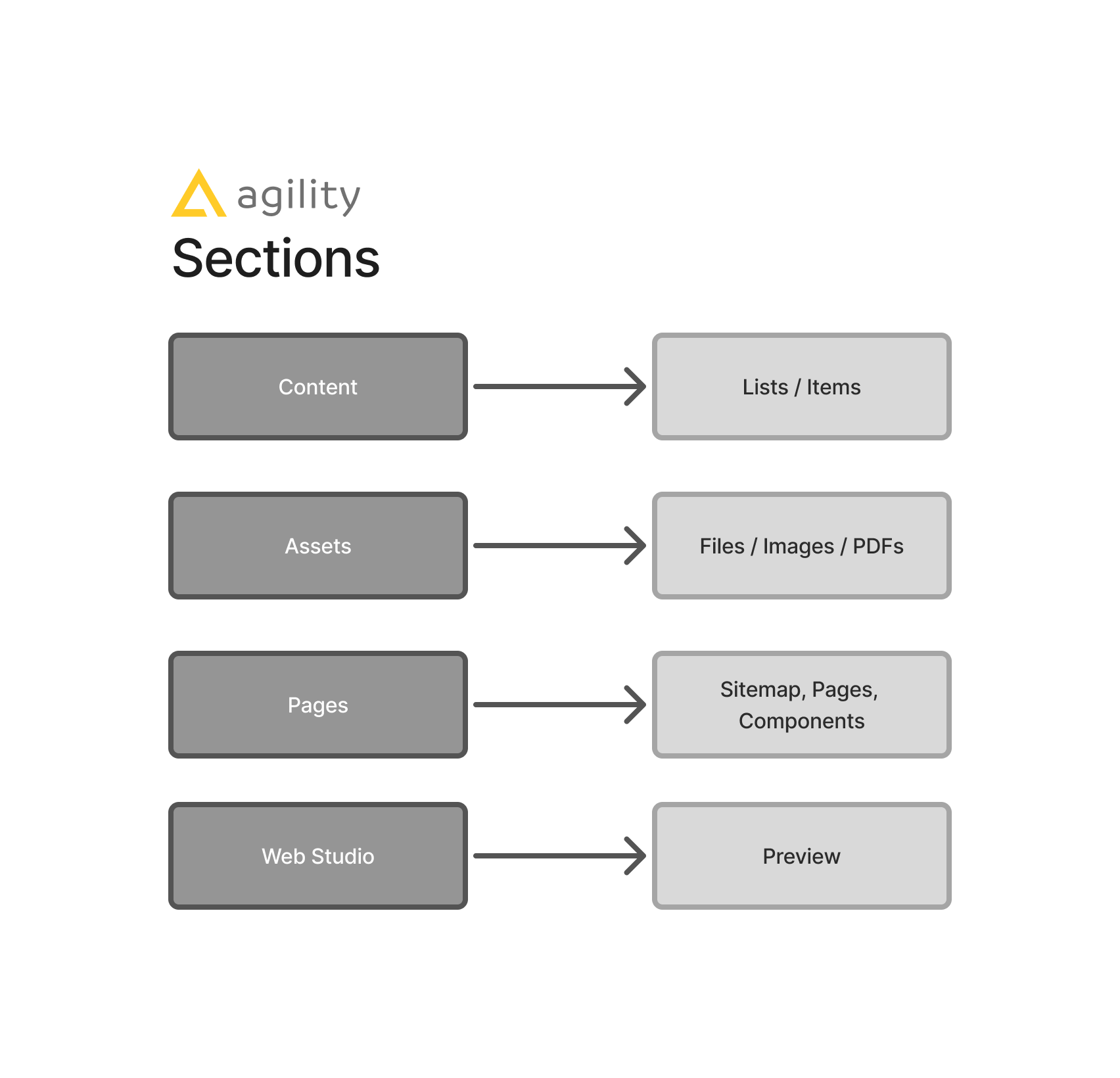
The Agility CMS interface is organized into four main sections:
- Content: Manage Lists and Items (reusable content)
- Assets: Manage Files, Images, and PDFs (media library)
- Pages: Manage Sitemap, Pages, and Components (page structure)
- Web Studio: Preview content before publishing
Key Concepts
Pages → Individual web pages organized in a sitemap Components → Reusable building blocks that display content on pages Content Items → Standalone pieces of content that can be linked to components Media → Images, documents, and other digital assets
What You'll Learn
This generic training guide will teach you:
- How to navigate the Agility CMS interface
- How to create and manage content items
- How to build pages using components
- How to work with the media library
- How to publish and preview content
- How to troubleshoot common issues
Each section focuses on how Agility CMS works in general, not how a specific instance is configured. This knowledge will apply to any Agility CMS instance you work with.
Next: Core Concepts - Deep dive into the Agility Data Model, Headless Architecture, and Sections